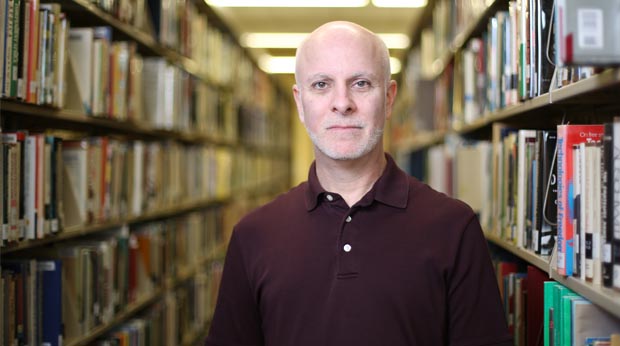
Joshua Bellin, Ph.D.
How can humans improve their relationships with the natural world and nonhuman animals?
Many of us have lost contact with the nonhuman world; at most, we might relate to our own personal pet, but not to the wider world of living creatures.
To develop stronger, more respectful relationships with nonhuman beings, classes on Animal Rights can be very valuable. But I also think we need to go out into the other-than-human world, and let the animals themselves be our teachers and guides.
Simply put, we can’t care about things we don’t know, so if we’re to care for the nonhuman world, we have to make an effort to connect with it on a deep and personal level.
What are some common misconceptions that contribute to the mistreatment of nonhuman animals?
There are a great many misconceptions, some of them easily refuted, such as the mistaken belief that nonhuman animals don’t experience pain or that they lack emotional lives. The underlying misconception, however—and one that’s very hard to overcome—is the belief that human beings are utterly different from and superior to all other animals. When you start from that premise, it’s easy to justify treating nonhuman animals in ways most of us would never dream of treating each other.
What inspired you to teach this class?
I’ve always loved nonhuman animals, especially frogs and gorillas. When I was young, my love for these creatures felt uncomplicated: I simply loved them, and it wouldn’t have occurred to me to question my own feelings, motivations and actions toward them.
As I’ve gotten older, I’ve come to recognize that as with our relationships to each other, human relationships to nonhuman animals are tremendously complex and often conflicted.
The desire to explore these relationships and share what I’ve learned gave birth to this class.
What do you hope participants take away from the class?
Mostly I hope participants will learn not to take nonhuman animals for granted—to think carefully about our individual as well as societal relationships to them, and to contemplate how those relationships might be strengthened, modified and improved for the benefit of both us and them.
What is your approach to teaching? What can students expect in your classroom?
I’m a storyteller, which means I like to talk a lot—about myself, about other people and about other non-people. But most human beings have an innate love of stories and an innate capacity for telling them, so I hope students will be willing to share their own experiences in this class.
There are important terms and concepts in the study of Animal Rights that will be conveyed in the form of lectures, but to me, the best classes take the form of conversations, with everyone learning from each other.